Showing posts with label decrypting. Show all posts

Wednesday, September 23, 2015

Spoon, Torcs, Staff, and Cross

This post is about some of the things the women depicted in the Voynich manuscript are holding--their purpose and significance--in addition to the drop spindle and distaff that are representative of Hulda and in addition to the bucket and birch so requisite to the sauna/banya.

Torcs

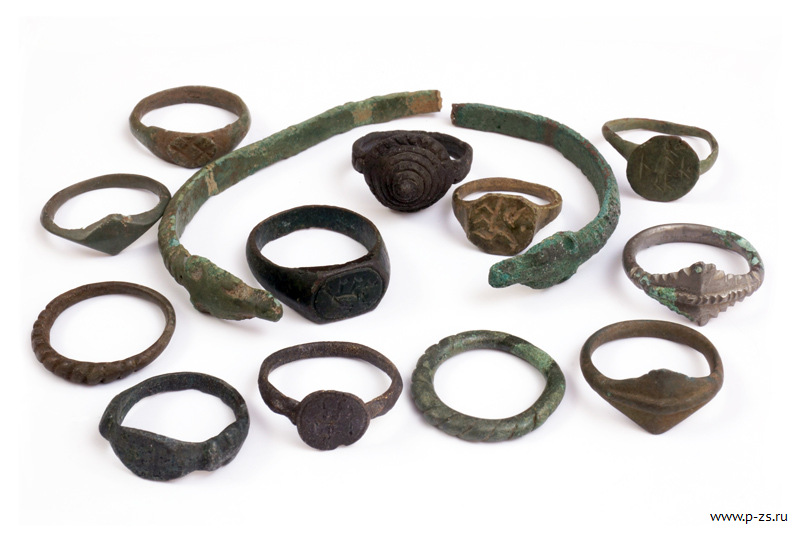
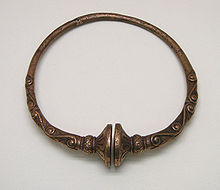
The best guess I can make on these rings,which are of course too big to be fnger rings or fibulas, is that they are some sort of torc used ceremonially or ritually somehow. There are quite a few of them throughout the manuscript. I suppose it might also be a torc-like annular brooch or bracelet, but the shape suggests a muffed torc. Torcs have been found in the UK and throughout the continent, some prominent ones being unearthed in France and northern Austria. It has been speculated that they served a more ceremonial purpose such as what appears to be going on below. You will see that some of these items bear a resemblance to artifacts in the Permian Animal Style. An issue in the Estonian Folklore journal is dedicated to this style.

Jewelry: Permian Animal Style
Below: Ring from Ural-Kama and South Ural population, including Ugric (Magyar) tribes.

Freyja - ancient Norse goddess
These torcs may have had beads inside them and been used as rattles to mimic/invoke thunder. Here is the Wiki on the torcs:
Other possible functions that have been proposed for torcs include use as rattles in rituals or otherwise, as some have stones or metal pieces inside them, and representations of figures thought to be deities carrying torcs in their hand may depict this. Some are too heavy to wear for long, and may have been made to place on cult statues.


Scoops or Spoons


Below is a blurb on the ceremonial significance of spoons (the English is a little broken).
Religious spoons - attributes holidays tools rites. Spoon to mix it was impossible, they were cast images of spirits. More than just survived spoons bear with a muzzle, which "fed" forest guest - bear head on the bear festival. Preserved Permian spoon depicting ostrogolovoy guises - the main spirit of the underworld. He also brought gifts and fed sacrificial food, in the hope that the troubles and disease bypass house donor side. On religious spoons wondered thrice throwing up. If the spoon fell head up - the answer was positive spirits.
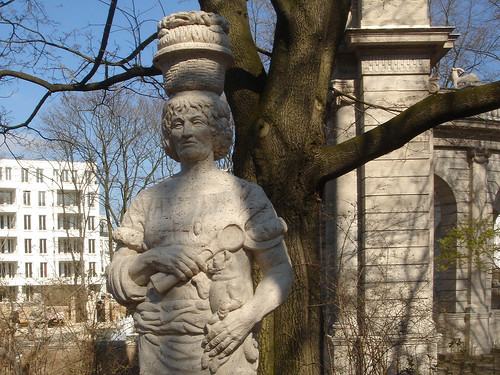
Frau Holle with spoon
Märchenbrunnen, Friedrichshain, Berlin, Germany

Staff

Leszek Gardela includes photographs of such staffs in her paper titled A Biography of Seidr Staffs: Towards an Archaeology of Emotions.

This is a bird-headed scourge handle found at Sofporog.
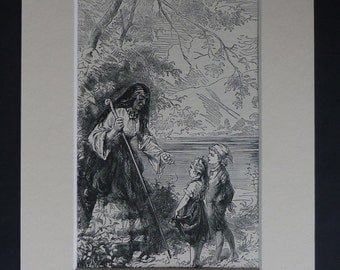
That's no cane, below left. She's holding it in the middle, like this witch depicted in 1643.


  • Above is a photo of Norse seidr staffs collected by Max Dashu. She says:
  • Seiðstaffs of the völur (Old Norse seeresses) are based on the design of distaffs. This symbolism ties in the shamanic staffs with the Spinning of the Norns, with fate-weirding actions, and it also helps to explain the intense female gendering of seiðr, the entranced ceremonies referred to in the Edda and sagas.,,  
Ynglingasaga says that Freyja "was a blótgyðja [sacrificial priestess]; she was the first to teach seiðr to the Æsir, as it was practiced among the Vanir.” [Ynglingasaga 4] In the same poem, Snorri claims this "greatest power" for Odinn; “But this sorcery [fjolkyngi], as is known, brings with it so much ergi that manly men thought it a shame to perform, and so this skill was taught to the priestesses.” [Ynglingasaga 7]  --Max Dashu, Witches and Pagans, forthcoming
  • Voynich woman holding staff and descending into cave
  • Spin-offs from distaffs and seidr staffs include a staff with snakes winding about it. Eileithyia, a Minoan goddess of childbirth and labour, is probably one of the earliest deities shown handling snakes. It is conjectured that this goddess (Alauta) was adopted from an early Indo-European culture.
Engraving from Le immagini de i dei antichi (Images of the Ancient Gods) by Vincenzo Cartari, 16th c.
Perchta
And this one with a clear subliminal message to never trust a woman with a staff.

Cross

I'd guess her family was in fact Christian and that this is not the earlier use of the cross as a fertility symbol. It is one of the very few allusions to Christianity in the manuscript.
What is a cross-holding and hence it may be assumed Christian woman doing participating in what is otherwise a wholly heathen ritual? Is that possible?

I think so, for two reasons.

First, throughout Europe as early as the 14th century what were later deemed "heretical" sects abounded, and some of them took biblical texts to interesting extremes. Such is the case with the Adamites in Bohemia discussed in the post about Chynov cave. It's entirely possible an Adamite could have joined these festivities and enjoyed them to the fullest.

Second, for centuries the old religion lived side-by-side with the Church, in many areas co-existing peacefully. This is especially true in the Baltic and northern states of Europe.

It is good to keep in mind that
in the rural countryside of Karelia, the local form of Orthodox faith remained somewhat primitive, incorporating many features of older religious praxis. Literacy among the Orthodox population was low. In 1900 it was estimated that of all persons over the age of 15 in East Finland, 32 percent were illiterate. The Orthodox population knew very little of their faith except the outer forms. The priests were generally Russians who seldom knew Finnish. As Karelia and its arable land was poor, it did not attract first class priests. The language of the services was Church Slavonic, a form of old Bulgarian. A Russian could understand some parts of the services, a Finnish-speaking person nothing. Finnish Orthodox Church
The Balts are exceptional among Indo-European groups in that they have maintained their language, folklore, pagan beliefs and customs in a remarkably pure state for so long. A deliberate effort to convert the native population to Christianity was begun only after Grand Prince Jogaila accepted baptism in 1386, together with the royal crown of Poland. But for a long time the new religions retained only a superficial hold on the population, which remained "stubbornly pagan" in some regions even to this century. To put it simply – the Balts were the last pagans of Europe. For more see Romuva.

To blow = to heal

The woman inside the sun below right looks like she is blowing out air. To the left of her is a scene from the movie "The Cuckoo." In it, the Sami widow Anni blows on near-death Finnish Soldier Veiko to turn him back to the land of the living.
Below is Veiko's soul being beckoned toward the land of the dead.

Below is an excerpt from Vladimir Napolskikh's "Seven Votyak Charms" from Estonian Folklore.
The common Votyak word for the healer (or witch-doctor) is emjas'kis' "healer" - a participle (= nomen agentis) from emjany; "to heal" - or pel'l'as'kis' "blower" - a participle from pel'l'as'kyny "to blow"; the last word describes one of the main ways of magic treatment, well-known throughover all the Europe, when the healer blows upon the water with charming and gives it to the patient to drink. 

Women "in the know" were also known as the vǫlur, tietäjä, seiðkonur, vísendakona, vǫlva, seiðkona, seiðr, noita, cailleach,  emjas'kis' or noaidi.

Sunday, June 28, 2015

The Handwriting

The Old Permic or Abur alphabet was created in the 14th century by the Russian missionary Stepan Khrap (1373- 1395), who become St Stephen of Perm. It was modeled on the Greek and Cyrillic alphabets, but many of the letters resemble the Komi religious "Tamga signs". (...) Komi (Коми), which is also known as Zyrian, or Komi-Zyrian, is spoken by about 350,000 people mainly in the Komi Republic (Коми Республика) in the northeast of European Russia.
Hauksbók ('Book of Haukr'), Reykjavík, Stofnun Árna Magnússonar
Above is an example of myriad Medieval manuscripts to be found within the golden hoard of Norse literary tradition. This Icelandic manuscript dates from the 14th century and was created by the Icelander Haukr Erlendsson. It recounts Eiríks saga rauða or the Saga of Erik the Red.

Medieval Norse history is inextricably woven into the history of the northern British isles because quite early on as well as Scandinavia the Norse settled there in substantial numbers. The culture of Orkney, for example, may be said to be far more Norse than that of Britain south of Hadrian's Wall. This is good to keep in mind when studying the Voynich manuscript because the script closest to it hails from Scotland.

Take a look at the following word from a different manuscript and see if you can read it.
Perhaps you came up with saPro.

Or outio.
Or oaPro.You're getting along about as far as most scholars who are studying the Voynich.

This word in fact does not come from the Voynich at all but rather from a letter that gained some renown in June of 2013 for its re-identification as being written by Robert the Bruce to Edward II. It was originally attributed to Robert's son.

Here it is in full.

The word above is, in fact, Latin.


Had it been written in a far more obscure tongue, scholars might still be stumbling about with its transcription and translation, but since it is Latin, the translation came rather easily, especially compared to the Voynich.

Take a look at some other words in this letter from Robert the Bruce, written roughly a hundred years before the Voynich.
Here's just a snippet from the Voynich.
Since it's in Latin, the letter "k" is at best scarce in Robert the Bruce's letter and may be completely absent, just as it appears to be in the Voynich. Rather, the "k" sound, if it appears, is presented as double c's as in ecclesie. Here's some Wiki on it.
In the earliest Latin inscriptions, the letters C, K and Q were all used to represent the sounds /k/ and /g/ (which were not differentiated in writing). Of these, Q was used to represent /k/ or /g/ before a rounded vowel, K before /a/, and C elsewhere. Later, the use of C and its variant G replaced most usages of K and Q. K survived only in a few fossilized forms such as Kalendae, "the calends".
When Greek words were taken into Latin, the Kappa was transliterated as a C. Loanwords from other alphabets with the sound /k/ were also transliterated with C. Hence, the Romance languages generally use C and have K only in later loanwords from other language groups. The Celtic languages also chose C over K, and this influence carried over into Old English. Today, English is the only Germanic language to productively use hard C in addition to K (although Dutch uses it in learned words of Latin origin and follows the same hard/soft distinction in pronouncing such words as English).
But let's say that in the Voynich, the language used is very fond of k's yet the writers are more familiar with (or have only an example of) Latin script. What they may do is for every k they wish to write pen a pair of c's.

The Handwriting

A manuscript written in Sweden at about the time the Voynich manuscript was written.
Detail from 'The Mirror of the Life of Christ', an illuminated 15th-century Scottish manuscript.

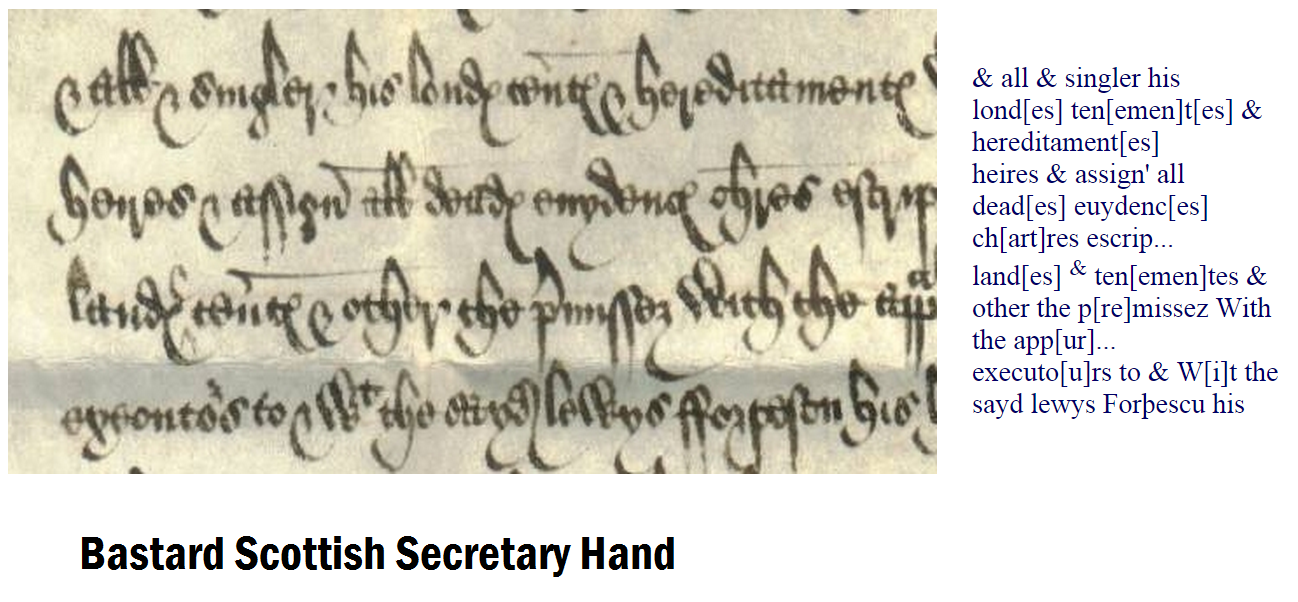
Below is a Register of Sasines for Glasgow, 1654-1656, written in Scottish secretary hand and taken from a superlative site on the subject, Scottish Handwriting.com. If you can read this without looking at the transcription, then you're on the road, at least, to reading the Voynich manuscript.
The words, of course, are Scots, not the language used in the Voynich, but if you transcribe a passage from the Voynich using letters from this alphabet, you get something strongly suggesting an arcane Fenno-Norse origin. The secretary hand was developed a century after the Voynich was written, so it would be absurd to say that the Voynich was written in Scottish secretary hand. In fact, it may be the other way around. Whatever hand this is in the Voynich may have heavily influenced the development of the Scottish secretary hand.

But how on earth, you might ask, did an arcane Fenno-Norse language end up written in a hand related to one used centuries later in Scotland?

A stigma has arisen against the Scots perhaps starting with the Romans, who became so sorely frustrated with them. By the time of the Glorious Revolution, especially the Scots in the Highlands were deemed for the most part incorrigible and illiterate. The potshots that Westminster takes to this day at the Scots (who have recently dared to clap in that non-clapping place) reflect this centuries-old stigma.

Since, like the Nordics, Scottish culture was not imbued with Judeo-Christian or Greco-Roman culture but something quite different, it was next to impossible for those south of them to admit they had any culture at all. (This is akin to researchers today clinging habitually to the canon to try to interpret the Voynich manuscript and shoehorning the imagery into explanations that they are familiar with in lieu of waking up to the presence of another, completely different culture which more than likely birthed it.)

It is good to keep in mind that Scalloway, Shetland, is a hundred miles closer to Bergen, Norway, than it is to Edinburgh. Especially in northern Scotland and most markedly across Orkney and Shetland, the Norse have had far more of an influence on Scottish culture than any people south of Hadrian's wall. The Scots language can be traced back to mainly Norse origins. For centuries the people on either side of the North Sea have traded, the Finns and the Sami being frequent visitors, along with north Germanics, and, going back all the way back to the Kvens up to the 15th century, nordic aristocrats owned tracts of land in north Scotland.
Below is a record from the county court of Chester, held on Tuesday after the feast of St Nicholas in the year 1310. It lists a fellow by the unfortunate name of Roger Fuckbythenavel preparing to be outlawed. This is so far the earliest sighting of the swear word in the English language. What is even more interesting for our purposes is the court hand in which the record was written. Note that the f appears as a double f and the l has two bizarre little top loops. In addition, the e is extremely rounded. Finally, the u and the v are identical.


Here is an example of how the smoke screen about Scottish culture has been recently lifting. A researcher at the University of Glasgow has discovered the oldest surviving non-biblical manuscript from Scotland. Although the Boethius manuscript (the 'Consolation of Philosophy') which dates to c.1130-50, was known and had previously been catalogued, scholars had believed it to be English, with Durham being the most likely place of origin. However, closer inspection has revealed that the manuscript's handwriting and illustrations do not match those of Durham, or other English books, from this period. Identifying the manuscript as a product of David I's Scottish kingdom means that Boethius was being read in Scotland 300 years earlier than previously thought. Dr Murray, who is conducting a British Academy Post-Doctoral Fellowship project on Boethius's 'Consolation of Philosophy' in Scotland, believes that this is proof that intellectual and literary cultures were flourishing in Scotland at a far earlier date than has been realised.

The Voynich derives from a medieval progenitor of Scottish Secretary Hand. The language is not Gaelic, but it is a combination of proto-Germanic and proto-Finno-Ugric, possibly a rare survivor from the Kvens. 

Perhaps you can see now, these is indeed a context for the Voynich manuscript's actual script. It's simply of course in a more obscure tongue than Latin and in a far more delicate hand than that of Robert the Bruce.


Thursday, May 15, 2014

The Plants


Quite a few flowers, like the cornflower below, are very easy to identify. Throughout the Germanic and Nordic countries, cornflowers have been rendered in ink and thread for centuries.


Nevertheless, it is next to impossible to rely solely on the plants to tell of an origin.
This is excerpted from a post by Annalee Newitz on blog io9.
As linguist Gordon Rugg put it to Grossman:
It's pretty good odds that you'll find plants in the world that happen to look like the Voynich manuscript just by chance. If I sat down with a random plant generator software and got it to generate 50 completely fictitious plants, I'm pretty sure I could find 20 real plants that happen to look like 20 of the made up plants.
Part of the reason for this is that the drawings are so stylized. The artist(s) who created them appear to be 1) untrained, 2) not too comfortable with the medium of paint, 3) rendering the plant with a scant amount of scientific knowledge. 

Can you paint plants like those in the Voynich Manuscript?

One of these is a Voynich plant; the others were painted by a) a former prime minister, b) a former president, and c) the lead singer of the Sex Pistols. Note that all three rely mostly and in some cases solely on overlap to convey three-dimensionality. The buttercup by Sid Vicious probably comes closest to reaching a similar goal to the Voynich renderings, which is to positively i.d. the specific plant as opposed to depicting general foliage. Vicious's buttercup is very buttercuppy--willowy stem; flat, waxy petals. He would have done the Voynich mss proud. The Voynich artist(s) viewed plants not the way an artist would nor the way a botanist would but the way an herbalist would--somebody gathering it for a use. Does it grow in clumps? Is the root a runner? What if it's not in bloom? What's its overall shape? Unlike Vicious's care with proportion, a Voynich plant's main identifying characteristics are highlighted without much regard to relative size. These paintings are supposed to be not necessarily realistic but a visual language to identify certain plants.


Here are paintings by professional artists, one contemporary to the Voynich and one to us*:
They rely on more than simple overlap to convey a sense of three-dimensionality. In contrast to the Voynich manuscript artists, these artists show a lifetime of detailed regard for aesthetics, practice, experience, and formal training in art.

The painters of the Voynich plants were relying on an extensive knowledge of folk art motifs in their region. This is why they look rather outlandish, stylized, and difficult to identify. The sample of embroidery is Estonian.

The later Swedish Dala painting seems to have borrowed from Baltic embroidery. Dala is an expression of picturesque joy. The fantasy is allowed to choose motives without restrictions as in poetry. 

Plant Deductions

Given that it's notoriously difficult to pinpoint any identification of a plant based on the Voynich's renderings, what follows are what I would guess the author(s) meant to describe based on shape, texture, and color of leaf, stem, flower, and root.

Beets

Beets are members of the Goosefoot Family (Chenopodiaceae), so named because their leaves are triangular, resembling a goose's foot. As with most of the Voynich plant drawings, proportion is forfeited so that minute details of the flowers can be revealed.

Sea Buckthorn


Helleborus

In the early days of medicine, two kinds of hellebore were recognized: black hellebore, which included various species of Helleborus, and white hellebore, now known as Veratrum album, which belongs to a different plant family, the Melanthiaceae. Although the latter plant is highly toxic, containing veratrine and the teratogens cyclopamine and jervine, it is believed to be the "hellebore" used by Hippocrates as a purgative.
Helleborus typically has five petals. Shown is a cultivated double hybrid.
"Black hellebore" was used by the ancients in paralysis, gout and other diseases, more particularly in insanity. "Black hellebore" is also toxic, causing tinnitus, vertigo, stupor, thirst, a feeling of suffocation, swelling of the tongue and throat, emesis (vomiting), catharsis, bradycardia (slowing of the heart rate), and finally, collapse and death from cardiac arrest. Although Helleborus niger (black hellebore) contains protoanemonin, or ranunculin, which has an acrid taste and can cause burning of the eyes, mouth, and throat, oral ulceration, gastroenteritis, and hematemesis, research in the 1970s showed that the roots of H. niger do not contain the cardiotoxic compounds helleborin, hellebrin, and helleborein that are responsible for the lethal reputation of "black hellebore". It seems that earlier studies may have used a commercial preparation containing a mixture of material from other species such as Helleborus viridis, green hellebore.

Helleborus orientalis subsp. orientalis (syn. H. caucasicus) is used as an herb for weight loss in Russian medicine.

In folklore

Several legends surround the hellebore; in witchcraft it is believed to have ties to summoning demons.

Helleborus niger is commonly called the Christmas rose, due to an old legend that it sprouted in the snow from the tears of a young girl who had no gift to give the Christ child in Bethlehem.

In Greek mythology, Melampus of Pylos used hellebore to save the daughters of the king of Argos from a madness, induced by Dionysus, that caused them to run naked through the city, crying, weeping, and screaming.

During the Siege of Kirrha in 585 BC, hellebore was reportedly used by the Greek besiegers to poison the city's water supply. The defenders were subsequently so weakened by diarrhea that they were unable to defend the city from assault.

An overdose of medication containing hellebore has been suggested as a possible cause of the death of Alexander the Great.

Carneades, when writing against the doctrines of Zeno of Citium, would consume white hellebore "so that none of the corrupt humours of his stomach might rise to the abode of his mind and weaken the power and vigour of his intellect."

Bog Rosemary

This is andromeda polifolia suokukka showing pink bud clusters. Andromeda polifolia, common name bog rosemary, is a species of flowering plant native to northern parts of the Northern Hemisphere. It is the only member of the genus Andromeda, and is only found in bogs in cold peat-accumulating areas. In Samigiella it is known as Alášrássi.  Prevalent in Finland's Muddus National Park, bog rosemary contains grayanotoxin, which when ingested lowers blood pressure, and may cause respiratory problems, dizziness, vomiting, or diarrhoea.


Buckbean

I challenged myself to find buckbean, because I knew the Sami have used it (Muoskkáš) in various ways, including making a bread (missen) out of it. So I looked for clusters of flowers shooting up from a long sole stem with a group of three leaves sort of cupping it, plus a generous, single root. Here is what I found.


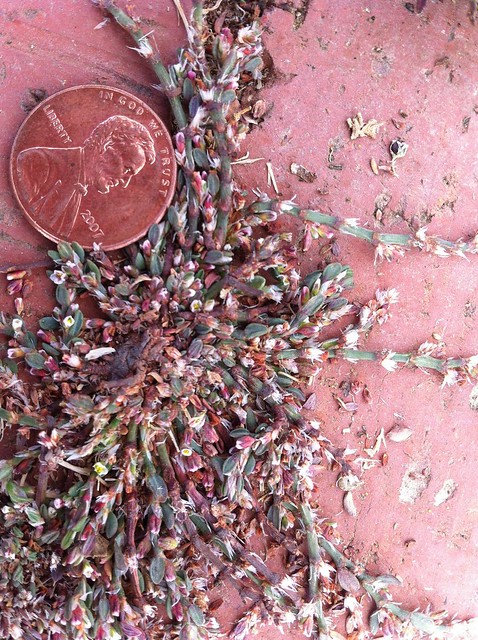
Common Knotweed


Sweet Woodruff


Cannabis

Nasturtium

Goldenrod


Pedicularis Flammea


Blueweed, viper's bugloss, blue devil (Echium vulgare)


To be honest, I was hoping this would turn out to be Gentiana asclepias, Swallow-wort Gentian, which is found also in Europe (here in Bieszczady National Park, Poland).
That would have at least loosely in name and appearance tied the Voynich manuscript back to a plant of great importance in Vedic Astrology and Asian medicine, the Giant Swallow-wort (Calotropis Gigantea *Asclepias gigantea * Arka-bhasman).  In Vedic Astrology, Giant Swallow-wort is tied to the Sun.

Certainly at least superficially, all three plants have a fairly similar appearance. But Echium is the one with protruding reddish stamens and striped, jagged, lanceolate leaves as depicted in the Voynich mss.

Even so, the fact that lists of names appear with plant pictures and star configurations would suggest some sort of system similar to Vedic astrology, where the most propitious name for a child is given after considering the calendar, the stars, and related plants. I have come to the conclusion that the Voynich has a far less elaborate system than Vedic astrology. It may in fact boil down to only name days and the rest is genealogical records.

These containers are not microscopes but containers for whatever herb helps with a certain malady. They probably differ slightly from each other to help those who cannot read discern which are what. Probably the malady or organ was written on the container, or something like vermifuge, not the plant's name.


*In your search for Leonardo among the leaves, if you come across a little monkey,
 it means my brother did it.

Spikenard

Sweet Chestnuts 

Meh, I still think it highly unlikely that the Voynich would come from anywhere south of Germany, and I think the little correlation below doesn't hold much weight at all, but I created it to try to smooth the feathers of those whose hearts are set on positing the origin in northern Italy.

On second thought, the word beside the plant, Susa, is probably just a coincidence.

The leaves, picked in June and July when they are in best condition and dried. They have also been used in the fresh state. Chestnut leaves have no odour, but an astringent taste.

Medicinal Action and Uses

In some places Chestnut leaves are used as a popular remedy in fever and ague, for their tonic and astringent properties.

Their reputation rests, however, upon their efficacy in paroxysmal and convulsive coughs, such as whooping-cough, and in other irritable and excitable conditions of the respiratory organs. The infusion of 1 OZ. of the dried leaves in a pint of boiling water is administered in tablespoonful to wineglassful doses, three or four times daily.

Culpepper says:


'if you dry the chestnut, both the barks being taken away, beat them into powder and make the powder up into an electuary with honey, it is a first-rate remedy for cough and spitting of blood.

The Famed "Mexican Sunflower"


This is a Senecio or Cineraria. Whether it is a Sinosenecio euosmus

Or a Sinosenecio septilobus

Or  a Senecio Rodriguezzi

Or bodinieri or even nanchuanicus or some other Senecio or Cineraria, I don't know. What I know, however, is that it is SENECIONINAE: Cineraria, Fleawort, Florist’s Cineraria, German Ivy, Golden Groundsel, groundsel, groundsels, ragwort, sea ragwort, squaw weed, tree daisies. I think with a composite like this it is a huge mistake to start off looking for the flower. You'll drive yourself mad. Rather, the leaf is extremely, extremely distinctive.

Nahuatl has nothing to do with the Voynich

The women depicted in the Voynich manuscript are blond and fair-skinned. Why would women with these traits be depicted by a man from Mexico in the 15th century? The star charts feature a woman's face in the center with rays emanating from her as if she were the sun. The Copernican revolution which posited the sun in the center did not occur until over a hundred years after the manuscript was written, and few images from any century show a woman as the sun. The cultures in which this is a tradition reside in north and central Europe, suggesting that the Voynich is of Slavic, Russian, or Karelian origin.